On the evening of November 4, 2025, Galen College of Nursing student Kensey Jochim was helping set up chairs for the Louisville campus’ graduation ceremony.
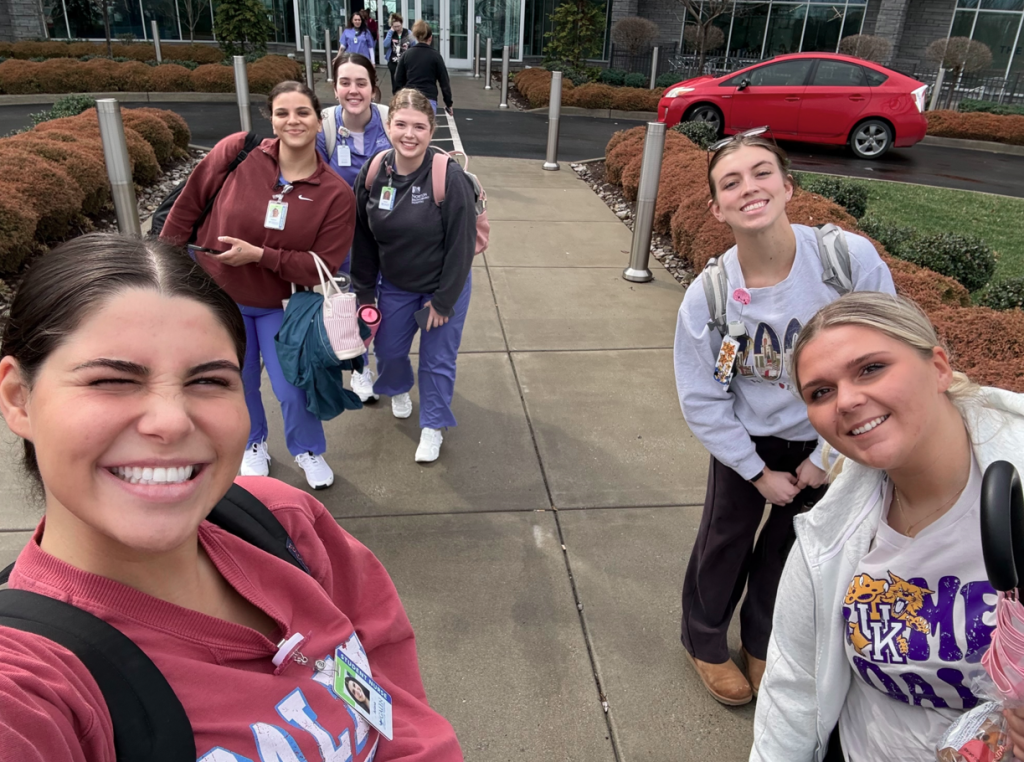
It had been a full but ordinary day — classes, leadership responsibilities, and preparing for the evening’s celebration. As president of the Galen Student Nursing Association (GSNA) in Louisville and a student in the Associate Degree in Nursing (ADN) program set to graduate in 2026, her schedule was often busy.
Then her phone buzzed. The message was from her charge nurse at the University of Louisville Hospital, where she works as a nurse extern in the medical ICU. A plane had crashed, and the hospital was calling in anyone who could help.
Kensey didn’t hesitate. She walked up to her dean, Dr. Kelli Selvage, and explained the situation.
“I hate to do this, but I need to go help. My city is on fire.”
Just hours earlier, she had been a student in class. By the end of the night, she would find herself working alongside nurses during one of the most intense emergency responses that the city has seen in recent years.
Just after 5:15 p.m., a UPS cargo plane crashed shortly after takeoff from Louisville International Airport. The explosion sent a massive black cloud into the sky that was visible across the city.
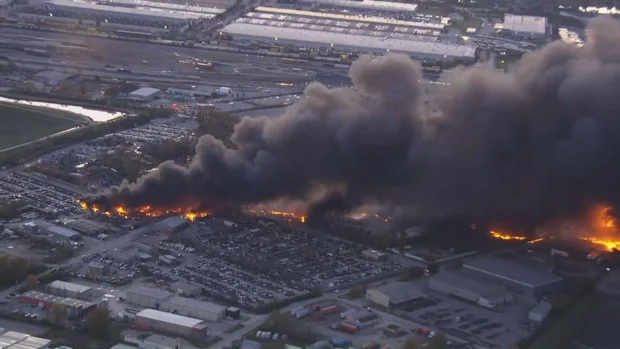
Emergency alerts began lighting up phones across Louisville as officials issued a shelter-in-place order due to the crash’s proximity to I-65 and surrounding areas.
For Kensey, the news arrived in fragments — emergency alerts, texts, and the growing realization that something serious had happened.
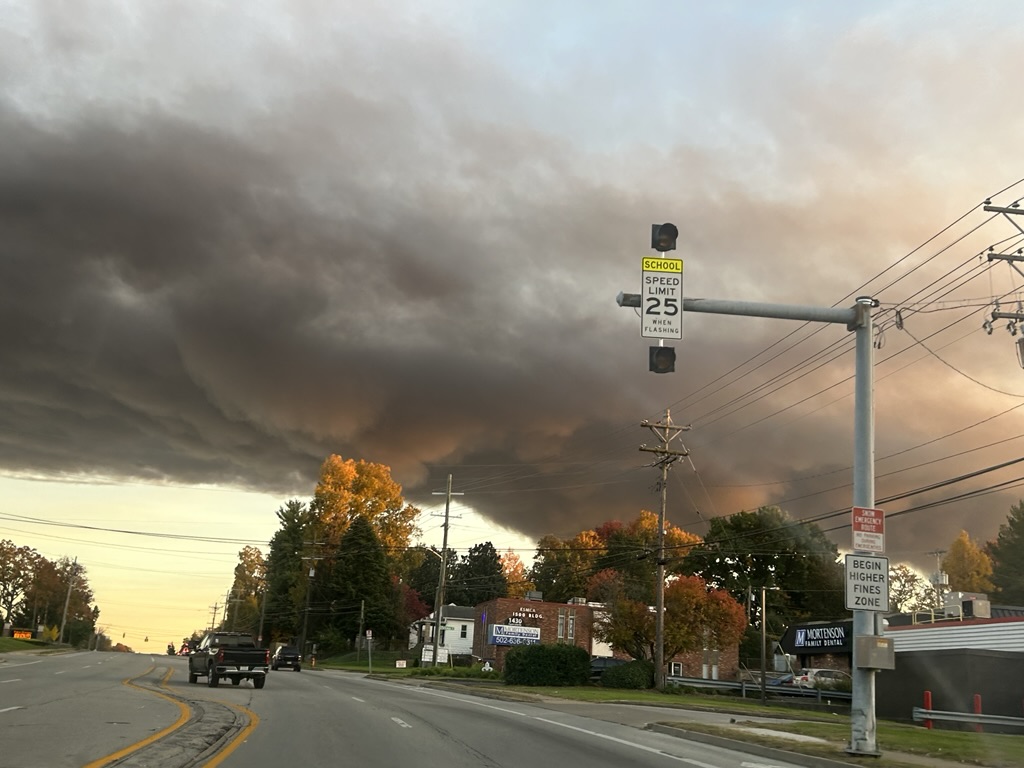
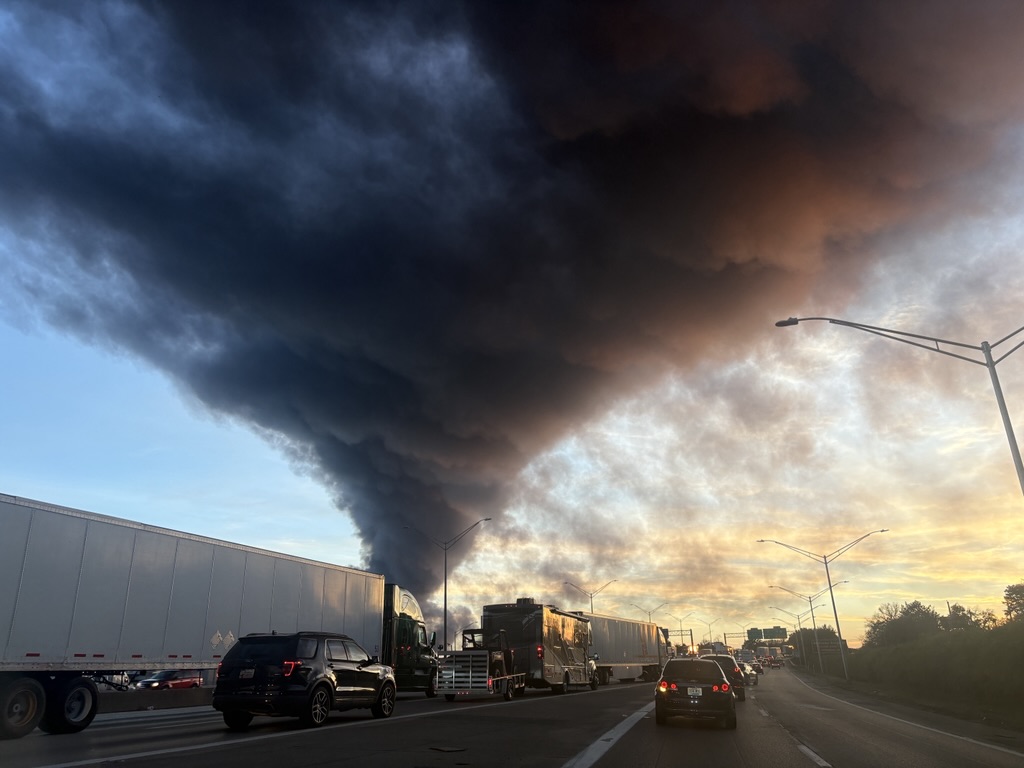
“We kept getting all the emergency alerts on our phones. So tensions were already high. We were stressed out, wondering what was happening.”
The situation struck close to home. Louisville wasn’t just where Kensey studied and worked — it was the city where she grew up.
“These are my people. And I know people that work at UPS currently. It was a really scary time for me just because of my connections to that building.”
Her sister worked at UPS. A neighbor was a UPS cargo pilot. As details were still emerging, the uncertainty weighed heavily.
In the months since, the crash has continued to shape conversations across Louisville and beyond. Just this week, news outlets reported that MD‑11 aircrafts — the same model involved in the crash — have begun flying again after receiving federal approval, a reminder of how long the ripple effects of that night have lasted for the city and for those personally connected to it.
Later that evening, as Kensey helped prepare for graduation, her phone buzzed again.
It was her charge nurse at the University of Louisville Hospital asking anyone available to come in and help.
Around her, graduation preparations continued, but Kensey’s focus shifted immediately to the message on her screen. She approached the dean, explained the situation and received permission to go in.
As she prepared to leave campus, she began seeing messages from coworkers who had received the same call for help. Nurses from the night shift and beyond were responding, offering to come in and asking what was needed.
“It was amazing to see the support just from my nightshift coworkers, everyone being like, ‘we’re coming in. what do you need,’ you know, and everyone was saying, ‘everyone please be careful.’”
Within minutes, Kensey gathered her things and headed downtown.
Getting there wasn’t easy. Kensey remembers, “I got to the hospital around 8pm because traffic was absolutely insane. The interstate had been shut down and it took me a while to get there.”
When Kensey arrived, something unexpected stood out immediately.
“It was an eerie sight. There were no ambulances in the ambulance bay yet. The tension was building because I was terrified of what was about to hit.”
Even with her ICU experience, the uncertainty was unsettling.
“You can never fully prepare for what you’re going to see, especially because we weren’t sure if it was a mass casualty incident. We were unsure of the amount of people that were on the plane and the amount of people that were impacted.”
Once she stepped into the hospital’s burn unit, the urgency hit.
“People were running around everywhere. We were helping transfer patients out, trying to open up beds for burn.”
The unit was filled with motion and conversation as teams coordinated next steps.
“There was a lot of noise, it was just a constant nervous chatter. We had so many other people that you don’t typically see on the unit. You had nurse managers, you had RTC, you had your supply chain people, you had your EVs workers. I mean, it was all hands on deck. So very loud in there. But it was for the greater good.”
Kensey quickly found her role in the response.
“I was a runner outside of the major burn, so I was able to help those nurses in that room. Just getting any supplies that they needed.”
As preparations intensified, the pace of the unit shifted into overdrive.

“The pace of the night — it was a full-on sprint. We were transferring patients out, making sure we had supplies.”
Kensey moved quickly throughout the hospital, gathering what the team needed.
“At one point, I was running down to the blood bank to get a big master infusion cooler and also getting labs done. I remember I was wearing a gray long-sleeved thermal and you could just see the sweat pooling on my body.”
At some point during the rush, she realized she had thrown her hair into a messy bun, though she couldn’t remember when.
“Me and a coworker were running up and down the stairs just looking for supplies because certain supplies they didn’t have, and we cleared out all the ICU. There was just so much that we did that in the heat of the moment, you don’t really remember it because you’re just running on adrenaline.”
Meanwhile, teams worked methodically to prepare for severe burn injuries.

“A lot of the people from my unit were prepping blood bags, so that if any mass transfusions were needed, we were ready to go. We were priming the blood tubing since you have to give warm fluids with burns. We were getting lines set up for them so when the patients came in, it wasn’t a matter of setting things up, just hooking them up.”
She also recognized that much of what she was seeing — and how the team was preparing — wasn’t entirely new.
“Galen and my time in the medical ICU both have prepared me in ways that I will be forever thankful for,” she said. “A lot of the things that the nurses were doing, like the steps that they took for burn patients — I had learned some of that in class. And the level of degree and the percentage of burns and how we calculate that.”
Inside the burn room, the environment was intense.
“It was a very packed and a very hot room. With burn injuries, you have to crank the heat up because the patients can’t properly thermo-regulate due to the loss of skin. So I think it was about 94 degrees in that room. We were all gowned up, gloved up. It was a sweaty mess. But everyone was there to do a job and we did.”
As the night continued, more staff members arrived to help. Some had already worked a full shift that day but stayed to support the response.
“Four or five people on my team — the medical ICU team — came in, and a lot of day shifters in the burn unit stayed well into the night.”
Eventually leadership had to remind some of them to go home.
“It was funny because it got to a point where I believe it was 11 or 11:30 at night and the charge nurse over on burn was yelling at the day shifters that they needed to go home. It was their time to leave, but no one wanted to. We all wanted to stay and help as much as we could.”

Looking back, what stood out most to Kensey was the teamwork she witnessed that night.
“It honestly was a privilege being able to work with that team, just to see everybody come together and hold each other up in that moment. So many people were there only thinking about the patients.”
In environments like the ICU or burn unit, where every second matters, Kensey says the coordination can become almost instinctive.
“That kind of teamwork feels wordless a lot. Whenever you’re in an ICU or when you are in an immediate care or intermediate care, like burn is, you kind of have to trust everybody that’s there. It seemed like everyone there shared one brain, so we knew exactly what needed to be done.”
Watching that level of teamwork unfold was a powerful experience for Kensey as a nursing student preparing for her future career.
“Just seeing everybody come together and know exactly what to do, like a well-oiled machine was breathtaking. It was amazing to see.”
As the nurses tended to all the patients, the full impact of the crash became clear.
“We had a patient that I believe had a 100% burn. I believe we also had an 80% burn and some others with minor injuries as well. It was a sight that I’m never going to forget. I would say prayers to those families and give condolences to them because it truly was a tragedy that night.”
The experience was unlike anything she had seen before and might never see again.
“There’s a lot of people that, in their entire lifetime working in a hospital or even a burn center that might not see the vast amount of burns that we saw. It was truly life changing to see.”
Eventually, word came that the hospital had received all the patients they were going to receive, and the pace slowed.
Around midnight, Kensey and her team were finally able to leave the hospital. Only then did the reality of the day begin to sink in.
“There were definitely some moments that I look back now and think, wow I really did that,” Kensey remembers.
She had started the morning in the classroom. By night, she had spent hours caring for her community in the aftermath of a tragedy.
“After I left, I definitely took some time to decompress in my car just because of the extent of the injuries that I saw. I’m very blessed to have such a strong support system — My mom is a nurse and she actually worked at U of L as well, so she is very familiar with trauma cases. I was able to call her and just take a minute. We talked through it and all the emotions that came with it.”
That moment also brought clarity. “It hit me then too that the nurses I work with had prepared me for a lot of things.”
She explained, “I’m pretty used to being in high intensity situations after working in the medical ICU for about a year and a half now. I also say chaos is my calm since I grew up with four siblings. I was able to use my adrenaline for something good that night.”
In the weeks that followed, Kensey wanted to find a way to recognize the nurses who worked alongside her that night.
“As the GSNA president and being there firsthand, I really wanted to find a way that we could support the nurses who worked that night and say a thank-you to them,” she shared.
Together, the group came up with an idea: handwritten thank-you cards from Galen students, signed as future nurses. They’re also working with an energy drink company to donate energy drinks to the team as another small gesture of appreciation.
Students were encouraged to write whatever messages felt meaningful to them.
“With the card messages, we gave them creative freedom. Some of the ones that I made, I just talked about how much I looked up to them and how inspiring it was to see them being so calm, cool, and collected.”
Many students kept their messages simple, expressing gratitude for the care the nurses provided during such a difficult night. As Kensey puts it, “they deserve a thousand thank-yous for what they did that night.”
For Kensey, the events of that night reinforced something she already believed about nursing — that the profession is built on teamwork, compassion, and showing up when people need help the most.
In the months that followed, her colleagues at the University of Louisville Hospital recognized those same qualities in her.
Kensey was presented with the BEE Award, a recognition program that honors clinical and support staff who go Beyond Exceptional Expectations in the care they provide to patients and families.

One colleague who nominated her wrote:
“I have worked with Kensey for over a year, during which she has consistently demonstrated exceptional compassion and empathy. She has repeatedly gone above and beyond for her patients and families. Her heart and her compassion remind me how important our role is and how we should never shy away from lending a hand to those who are struggling.”
For Kensey, the recognition reflects the same spirit she witnessed that night — a team of healthcare professionals stepping forward to care for their community when it mattered most.

 Apply Now
  Request Information
  Contact Us (877) 223-7040