If you’re thinking about becoming a nurse, but you need to (or want to) continue working full time – don’t worry. You’re not alone.
Thousands of Galen College of Nursing students and graduates across the country have accomplished this same feat. These students live busy lives, between work, family, and everything in-between. But they’ve proven that working full time while attending nursing school isn’t just possible – it’s life changing.
The journey isn’t easy. You’ll have to work hard, lose sleep, and make other sacrifices during your nursing education journey. But you’ll also discovered an inner strength you didn’t know you had, and the payoff at the end is worth it, earning your nursing degree and leveling up your career.
Here are 5 crucial tools to know as told by former students – and current Galen faculty members – to help you achieve your goals while working full time:
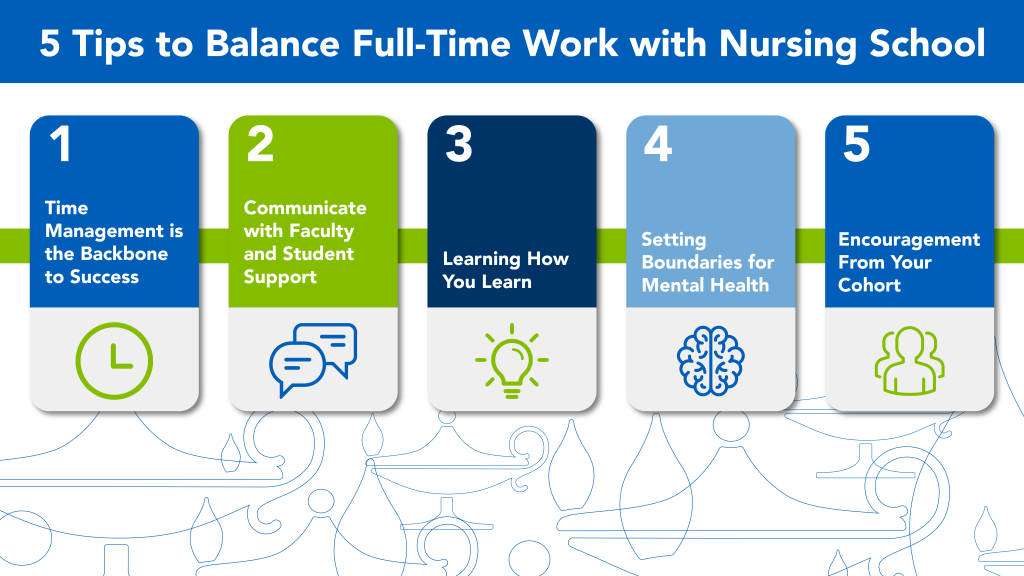
Both of our instructors agreed that the number 1 tip for students is to be organized with your time. Nursing school is hard, and it requires a lot of hours to attend classes, clinical rotations, and study. Balancing that with a full time job, and in some cases, family, takes a lot of planning.
“Your time management has to be on point… you need to have some sort of calendar where you’re planning what you’re going to do and when,” Vocational Nurse Program Director at Galen San Antonio, Wendi Myers, MSN-Ed., RN, said. “While you’re in school, you’re not going to be able to do everything you did before. You have to make sacrifices to be successful.”
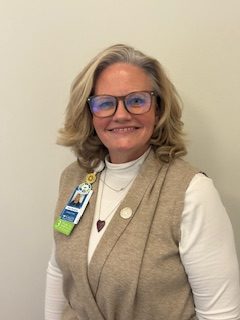
Myers, who along with Galen San Antonio Interim Dean Alicia Mendiola, MSN, RN, are enrolled in Galen’s Doctor of Nursing Practice program, said that she literally scheduled out work time, study time, me time, and family time. It helped keep her on track so she could stay on top of her job work and her school work.
Mendiola also added this tip for students who may start strong but get overwhelmed.
“I tell myself, ‘I can do this’, and I do a weekly reset to make sure I am organized,” Mendiola said.
During your academic journey, you may run into trouble, whether you fall behind on an assignment or have a worse-than-expected grade on a test. But if you do run into an issue, you don’t have to suffer in silence. Reach out!
“When they (students) to faculty proactively, we can develop a plan that keeps them out of trouble.
At Galen, every faculty member was once a student, so they’ve been in your shoes before. And for many of them as well, they also may have been working a full time job while going to nursing school. So the faculty members – and program leadership – can help students stay on track if they run into any issues.
Additionally, Galen students have access to numerous resources, from tutors, to counselors, to academic support staff, content specialists, and more. Use those resources to help accomplish the tasks at hand, so you can continue to the next stage of your journey.

Nursing school is challenging, in part because of the advanced, complex nature of what nurses do, along with being tested in theory classes, labs, and in clinicals.
But additionally, one of the challenges within nursing school is that the way students learn has to change over the course of the program. Our Nursing Fundamentals course lays the foundation that every nurse builds upon, and courses become more advanced and challenging by the time you get to the end.
“Not everybody learns the same, and how they learn will change over the duration of the program,” Myers said. “Students may think they can study the same way in Quarter 2 as Quarter 1, but it’s more advanced — they have to re‑figure out how to study.”
Mendiola also recommends that students come to class prepared. Do the assigned reading, complete any homework assignments, and you’ll be better prepared to stay on top of your coursework.
All of the hard studying is worth it in the end, as it prepares students to pass the NCLEX. Galen’s NCLEX pass rates match or exceed that of the national average, setting up students for success as a professional nurse.
When you’re trying to balance between work and school, it can be easy for one to bleed into another. That’s why it’s important, both for your education, job, and your mental health, to set clear boundaries.
“When I get home, I turn off notifications,” Myers said. “I tend to leave for work earlier, so I can leave work earlier. And after 5:00 pm, it’s my time. I do what I want to do, whether it’s family time, cooking, or studying.”
Being able to turn off work for school, and vice versa, is one crucial way to keep a good mental headspace during your education.
In addition, if you are struggling with your mental health, Galen offers counselors on some campuses, who can speak with you about school, life, and everything in between.
“If our students really are just struggling, and it does not have to be related to school, it can be anything that’s going on in their life. We do have a counselor that they can reach out to, and, you know, schedule some time with her, and it’s at no cost to the students,” Myers said.

Lastly, in addition to leaning on your faculty, program directors, and Galen student support, don’t forget to lean on your fellow students. No one will understand your journey as well as your cohort, and many of them may be in the same boat as you are. You can all help each other by sharing notes, ideas, and resources together.
“A study group can just be you and one other person,” Mendiola said. “If you find your person, stick to them.”
If you have time, you might find meaning in student organizations as well. Nearly every campus has a Galen Student Nurses Association, student ambassadors, and some campus have veterans groups as well for former military members.
“If they feel they have the time, yeah, being part of a student organization can build that cohesiveness (with fellow students),” Myers said.
We spoke with Galen Louisville students Rebecca Milliron, Vice President of the Louisville GSNA, and Tiffany Askren, about what it’s like to work while going to Galen. Here’s their advice to current and future students.

Rebecca:
Tiffany:
If you’re thinking about starting your nursing education, now is the time to apply. Galen offers three pre-licensure programs: Our PN/VN diploma program, Associate Degree in Nursing (ADN) program, and 3-year Baccalaureate Degree in Nursing (BSN) program.
If you’re looking to level up your nursing career, take a look Online degree programs, allowing you to complete your degree with the flexibility you need to continue your career.

 Apply Now
  Request Information
  Contact Us (877) 223-7040